

Customs Clearance China Imports Poland: 2026 Import Guide
Navigating the complexities of customs clearance for China imports to Poland requires a precise understanding of EU regulatory frameworks and local Polish fiscal requirements. Many importers face unexpected delays due to misaligned documentation, valuation discrepancies, or failure to secure the correct fiscal representation before cargo reaches Baltic gateways. By partnering with China Freight World, businesses can transform fragmented logistics into a streamlined, compliant, and predictable supply chain operation. This 2026 handbook outlines the critical checkpoints, document standards, and management strategies necessary to move your cargo from Shanghai/Ningbo to Polish distribution centers without unnecessary friction.
Key Takeaways
A standard 40HQ container holds approximately 65-70 CBM of dense cargo while maintaining safe weight limits for European road transport.
Customs entries for Poland must be filed via the national AIS/ICS2 system, requiring a valid EORI number registered in an EU member state.
Duty and VAT payments are typically settled at the time of entry, though deferred duty accounts can reduce immediate cash flow strain for high-volume importers.
Partnering with a specialized broker ensures that HS codes, country of origin certificates, and valuation data are reconciled before the vessel or aircraft arrives.
Which Importer-of-Record and POA Steps Must Be Locked Before First Entry?
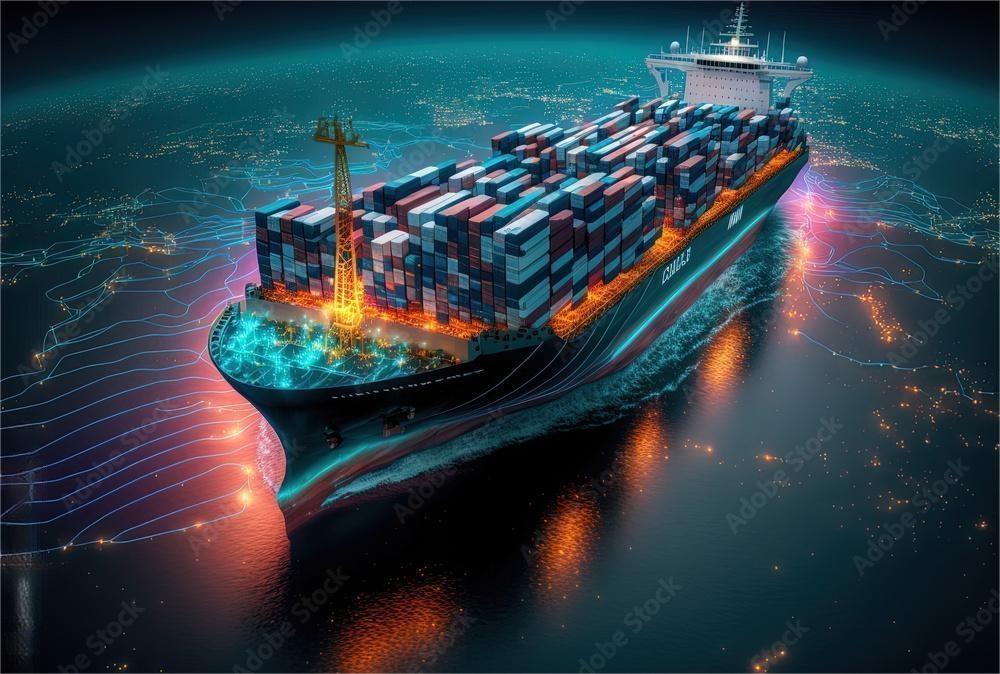
Establishing a clear Importer of Record (IOR) is the foundational step for any entity importing goods from China into Poland. In the EU context, the IOR must hold a valid Economic Operators Registration and Identification (EORI) number, which serves as the primary identifier for all customs interactions across the bloc. Without this number, your cargo will be unable to clear customs, leading to immediate storage fees and potential abandonment of goods at the port of entry.
The Power of Attorney (POA) serves as the legal bridge between the importer and the customs brokerage firm, granting them the authority to act on your behalf before the Polish National Revenue Administration (KAS). This document must be executed and filed well in advance of the first shipment arrival to ensure that the broker has the necessary permissions to transmit data via the national customs system. Failure to secure this authorization early often results in frantic, last-minute administrative efforts that compromise the integrity of the customs declaration.
Importers must also decide whether they will act as the IOR themselves or utilize a fiscal representative to manage the VAT and duty obligations. For foreign companies without a local Polish presence, fiscal representation is often the most efficient route to avoid complex local tax registration requirements. We recommend finalizing the IOR status and the formal broker POA at least two weeks before the first scheduled departure from China to ensure all systems are synchronized for a seamless entry process.
| Component | Requirement | Owner | Failure Risk |
|---|---|---|---|
| EORI Registration | Mandatory ID | Importer | Port Hold |
| POA Filing | Formal Authority | Broker/Importer | Entry Denial |
| Fiscal Rep | Tax Compliance | Representative | VAT Penalty |
| Bond/Guarantee | Duty Coverage | Importer | Release Delay |
Common mistake: Neglecting to secure the EORI number before the shipping date.
Risk alert: Lack of fiscal representation can lead to double VAT taxation scenarios.
How Should HTS Classification and Valuation Be Documented to Survive Audit?
Accurate HTS classification and valuation are the pillars of a defensible customs profile, shielding importers from retrospective audits and heavy fines. Every product imported from China must be assigned the correct Harmonized System (HS) code, which determines the applicable duty rates, anti-dumping duties, and import restrictions. Incorrect classification is one of the most common reasons for post-clearance audits that can result in significant financial penalties and retroactive duty assessments.
Valuation documentation must be equally robust, ensuring that the declared value on the commercial invoice aligns with the actual transaction price between the buyer and the seller. Polish customs authorities examine the inclusion of ‘assists’—such as molds, tools, or design services provided at no cost by the importer—which must be added to the customs value. Maintaining a detailed record of these costs is vital for proving that the declared value is accurate and compliant with World Trade Organization valuation standards.
To survive an audit, importers should maintain a centralized ‘compliance pack’ for every SKU, containing the product description, material composition, intended use, and supporting classification rulings. Regularly reviewing these documents with your broker ensures that any changes in EU trade regulations or HS code updates are immediately reflected in your declarations. This proactive approach not only simplifies the entry process but also demonstrates to customs authorities that your company maintains a high standard of regulatory due diligence.
| Equipment Type | Internal Volume (CBM) | Max Payload (kg / lbs) | Optimal Commodity Fit |
|---|---|---|---|
| 20ft Standard (20GP) | 28–30 CBM (26 usable) | 21,800 kg / 48,000 lbs | Dense, heavy cargo (machinery, auto parts, metals) |
| 40ft Standard (40GP) | 58–60 CBM (54 usable) | 26,500 kg / 58,400 lbs | General packaged cargo, standard palletized loads |
| 40ft High Cube (40HQ) | 68–76 CBM (68 usable) | 26,500 kg / 58,400 lbs | Bulky, lightweight goods (furniture, textiles, electronics) |
| 45ft High Cube (45HQ) | 85–86 CBM (78 usable) | 27,500 kg / 60,600 lbs | High-volume consumer retail distribution |
Common mistake: Failing to account for ‘assists’ and design fees in the declared customs value.
Risk alert: Retroactive audits can reach back several years, causing massive unexpected duty liabilities.
What Happens During Customs Exams, Holds, and Detention Clocks?
When a shipment is flagged for a customs examination in Poland, the process moves from routine clearance to a specialized hold phase. Exams are typically triggered by discrepancies in paperwork, high-risk commodities, or random selection for safety compliance checks. During this time, the cargo is moved to a secure examination area within the port or airport, and the importer becomes responsible for the associated handling and storage fees incurred while the authorities inspect the goods.
The detention clock starts ticking as soon as the container is placed on hold, and costs can escalate rapidly depending on the duration of the inspection. It is critical to have a clear communication channel between your logistics provider and the customs broker to manage these holds effectively. Mitigation strategies often involve providing additional supporting documents, such as technical diagrams or chemical safety data sheets, to help customs officers verify the cargo’s status quickly and resolve the hold without prolonged delays.
Importers should proactively budget for potential exam fees, as these are considered a standard operational risk in international trade. Establishing an emergency response plan with your broker can help expedite the release process by ensuring that all necessary documentation is available at a moment’s notice. By maintaining visibility over the status of your shipment through digital tracking tools, you can anticipate potential bottlenecks and coordinate with your internal teams to adjust delivery schedules accordingly, minimizing the impact on your downstream supply chain.
| Exam Type | Typical Duration | Trigger | Mitigation |
|---|---|---|---|
| Document Review | 1-2 Days | Incomplete Data | Submit Addenda |
| Physical Inspection | 3-5 Days | Risk Profile | Clear Manifest |
| Lab Testing | 7-21 Days | Safety/Chem Check | Provide Certs |
| Hold/Detention | Varies | Duty Non-Pay | Settlement |
Common mistake: Ignoring the notification of a customs hold until storage fees become prohibitive.
Risk alert: Unresolved holds can lead to terminal storage charges exceeding the value of the goods.
When Do PGA and Partner-Government Agency Filings Run Parallel to Customs Entry?
Partner Government Agencies (PGAs) in Poland, such as the Veterinary Inspection or the Trade Inspection, play a crucial role in regulating goods that impact public health, safety, or the environment. When importing regulated items, the customs entry process must run in parallel with the required PGA filings to ensure that all necessary permits and certificates are approved before the goods are released. Coordinating these filings early is essential to prevent the cargo from being stuck at the border waiting for secondary approvals.
The complexity of these filings varies based on the product category, with food, electronics, and medical devices often requiring the most stringent documentation. Each agency has its own specific set of data requirements and submission timelines, which must be accurately captured within the customs declaration. Failure to align these filings often results in a ‘hold’ status, where the customs authorities will not release the cargo until they receive confirmation from the respective PGA that all regulatory standards have been met.
To manage this effectively, importers should perform a regulatory assessment of all products before they are sourced from China. Knowing which items require specific permits allows your broker to prepare the necessary documentation well before the shipment arrives at the Polish border. This integrated approach ensures that the customs entry is filed with all required agency data, reducing the likelihood of inspection and speeding up the overall clearance process significantly.
Common mistake: Failing to check specific Polish regulatory requirements for consumer electronics.
Risk alert: Lack of proper safety certifications can result in the seizure and destruction of imports.
How Do Brokers Coordinate ISF, Entry Summary, and Delivery Authorization?
The coordination between the Entry Summary, security filings, and final delivery authorization is a high-precision operation that relies on timely data exchange. For ocean shipments arriving in Poland, the Entry Summary must be submitted to the customs authorities containing detailed information about the cargo, the consignee, and the transit route. Once the declaration is accepted and the duties are processed, the customs system issues a release message, which is the green light for the terminal to authorize the release of the cargo for drayage.
Brokers act as the orchestrators of this process, ensuring that the data transmitted to the customs system matches the physical cargo being offloaded from the vessel. They coordinate with the carrier to receive the Bill of Lading, verify the manifest details, and then lodge the entry in the national customs portal. This synchronization is critical; any discrepancy between the manifest data and the entry summary can lead to a rejection of the filing, causing a cascade of delays that ripple through the entire logistics chain.
Effective communication is the key to successful coordination. Importers should expect their brokerage partners to provide regular updates on the status of their filings and alert them to any issues as soon as they arise. By maintaining clear records and ensuring that all parties—the shipper, the carrier, and the broker—are working from a single source of truth, you can ensure that the delivery authorization is obtained without unnecessary bottlenecks, allowing for the timely transport of goods to your final destination.
| Document | Purpose | Timing | Risk |
|---|---|---|---|
| Entry Summary | Customs Release | Pre-Arrival | High |
| Bill of Lading | Ownership | Post-Departure | Medium |
| Commercial Invoice | Valuation | Pre-Departure | Critical |
| Packing List | Inventory | Pre-Departure | Medium |
Common mistake: Allowing the carrier to release cargo before the customs entry is fully processed.
Risk alert: Unauthorized release of cargo can lead to severe fines and loss of customs privileges.
Which Invoice and Packing-List Mismatches Trigger Reconciliation Holds?
Inconsistencies between the commercial invoice and the packing list are among the most frequent triggers for customs reconciliation holds. Polish customs officials compare the total quantity, weight, and value declared across these documents to ensure they match the physical contents of the shipment. A mismatch in the number of packages, the description of goods, or even the total weight can signal potential fraud or misclassification, prompting an immediate investigation that halts the clearance process.
Reconciliation holds are not just about correcting a clerical error; they require a formal review of the documentation, which can take several days or even weeks. During this period, the shipment is often held at the terminal, incurring storage fees and threatening your delivery schedule. The most effective way to prevent these holds is to implement a strict documentation review process at the point of origin, ensuring that all paperwork generated by your Chinese suppliers is consistent before it is sent to your broker.
If a discrepancy is identified, it must be addressed through a formal correction process with the customs authorities. This typically involves submitting a revised declaration and, in some cases, providing proof of the actual shipment contents. To avoid this entirely, we recommend that importers provide their suppliers with clear templates and instructions for document preparation, ensuring that the invoice and packing list are always in alignment with the actual cargo loaded into the container.
Common mistake: Discrepancies between the packing list weight and the actual weight reported by the port.
Risk alert: Recurring document errors can lead to a ‘high-risk’ profile for the importer, increasing exam frequency.
How Should Importers Manage Duty, Tax, and Bond Exposure on Repeat Entries?
For importers who engage in repeat entries, duty and tax management becomes a strategic financial function. In Poland, goods are subject to import duty and VAT, which must be paid at the time of entry unless the importer has established a deferred payment account. Managing these liabilities effectively requires a clear understanding of your duty exposure, which can often be optimized through the use of specific trade agreements or duty-suspension regimes available for certain categories of goods.
Bond exposure is another dimension that requires careful management, particularly for companies that frequently import high-value items. Customs bonds act as a financial guarantee to the government that all duties and taxes will be paid in full. For high-volume importers, maintaining a continuous bond is far more economical and operationally efficient than securing individual bonds for every shipment. Regularly reviewing the amount of your bond against your actual import volume ensures that you have sufficient coverage while minimizing unnecessary capital tie-up.
Finally, importers should consider periodic classification reviews to identify opportunities for duty savings. Trade regulations evolve, and a product that was once subject to high duties might now qualify for a lower rate or a duty exemption. By keeping a close eye on your landed costs and working with your broker to identify these opportunities, you can significantly reduce your total duty and tax exposure, improving your overall margin and competitive position in the Polish market.
Common mistake: Failing to utilize duty-deferment programs when cash flow is tight.
Risk alert: Insufficient bond limits can cause shipments to be stopped at the border.
What Is the Escalation Path When Clearance Delays Threaten Delivery Appointments?
When customs clearance delays threaten your critical delivery appointments, having a pre-defined escalation path is essential. The first step in this process is to identify the root cause of the delay—whether it is a documentation gap, an exam hold, or a regulatory inquiry. By obtaining precise information from your broker, you can determine if the delay is manageable or if it requires intervention from higher-level contacts within the customs administration or your logistics provider’s management team.
If a shipment is critical, you should communicate the potential impact on your business to your logistics provider immediately. This allows them to prioritize your shipment and explore alternative solutions, such as expedited document processing or requesting a priority exam status. While not always possible, clear and professional communication highlighting the business impact can sometimes help move a stalled shipment through the system, especially if the delay is due to administrative bottlenecks rather than regulatory non-compliance.
Finally, for long-term improvement, use every delay as a case study to identify weaknesses in your supply chain process. If a specific document or a particular regulatory hurdle is consistently causing issues, it may be time to change your supplier instructions or adjust your sourcing strategy. By documenting the escalation path and learning from each incident, you can build a more resilient customs strategy that minimizes the risk of future delivery disruptions and keeps your supply chain moving smoothly.
Common mistake: Waiting too long to escalate a delay to the management level of the brokerage.
Risk alert: Unmanaged delivery delays can result in heavy penalties from B2B customers.
Decision Framework
By volume: Capture CBM/kg first; under ~2 CBM often fits express/air, mid volumes need LCL/FCL comparison, and oversized lots require dedicated equipment quotes.
By speed: Urgent windows under ~7 days favor air/express; standard replenishment can use ocean, rail, or multimodal once cargo-ready timing and destination entry data are locked.
By cargo profile: Flag DG, temperature-control, or oversized handling before award — these change documentation and carrier acceptance. Use destination national filings only.
Real-World Corridor Case Studies
A apparel & textiles shipper moved seasonal apparel and textile cartons from Ningbo, China to Hamburg on a scoped rail corridor. The forwarder locked volumetric billing on light cartons, moisture desiccants, and retail labeling before block-train departure, aligned commercial invoice and packing list data with the rail consignment note, and tracked terminal discharge so free-time clocks stayed inside negotiated windows.
A automotive parts shipper moved automotive aftermarket components from Chongqing, China to Duisburg on a scoped rail corridor. The forwarder locked JIT delivery windows, OEM packaging specs, and HS chapter accuracy before block-train departure, aligned commercial invoice and packing list data with the rail consignment note, and tracked terminal discharge so free-time clocks stayed inside negotiated windows.
Customs Entry Control Plan for China-Poland Imports
Customs clearance for China imports into Poland succeeds when classification, valuation, and agency filings are lodged as one timeline—not after containers hit storage. By treating customs as a proactive supply chain function rather than an administrative afterthought, importers can significantly reduce their exposure to unexpected costs and delivery disruptions.
Write exam and detention cost ownership into the broker SOW before arrival pressure starts. Need customs clearance support? Share HTS hints, commercial invoice, arrival port, and delivery deadline for an entry readiness review.
Process and Checkpoints
IOR & Bond Setup
Confirm importer of record, continuous bond or single-entry bond, and power of attorney with the broker.
Classification & Valuation Pack
Align HTS, country of origin, and declared value with commercial invoice and any assist/additional charges.
Pre-Arrival Entry Lodgement
File entry summary and partner-agency data before cargo arrives to protect terminal free time.
Exam & Hold Management
If customs selects exam, coordinate container pull, sampling, and storage fee exposure with the broker.
Duty & Tax Settlement
Pay duties, MPF/HMF, and deferred tax lines; reconcile CBP release messages against delivery orders.
Post-Entry Corrections
Track PSCs, reconciliations, and audit responses for repeat importers.
Confirm the right route for your shipment
Need customs clearance support? Share HTS hints, commercial invoice, arrival port, and delivery deadline for an entry readiness review.
Request a route reviewFrequently Asked Questions
Which party is legally responsible as Importer of Record when cargo is held?
The Importer of Record (IOR) is the entity legally responsible for ensuring the goods comply with all local laws and for paying all customs duties and taxes.
Which party pays customs exam fees when a shipment is selected for inspection?
The importer is responsible for paying all fees associated with customs examinations, including container drayage to exam sites and storage costs.
How can shippers control demurrage or terminal storage after a customs hold?
Shippers can control these costs by maintaining accurate documentation and coordinating closely with their broker to expedite the release process immediately upon a hold notification.
What is the mandatory cut-off time for submitting documentation?
Documentation should be submitted to your broker at least 48 to 72 hours before the vessel’s arrival to ensure timely processing of the entry summary.
When is duty and VAT typically payable for imports into Poland?
Duty and VAT are typically payable at the time of customs entry unless the importer has set up a deferred duty account or a specialized tax arrangement.
Which documents must be verified prior to requesting a release?
You must verify the commercial invoice, packing list, and Bill of Lading (or AWB) to ensure all data points match before requesting the final release from customs.
Rates and surcharges fluctuate; request an itemized quote.
Informational only; not binding legal/tax/customs advice.
Benchmarks reflect standard 2026 practice for this corridor.